
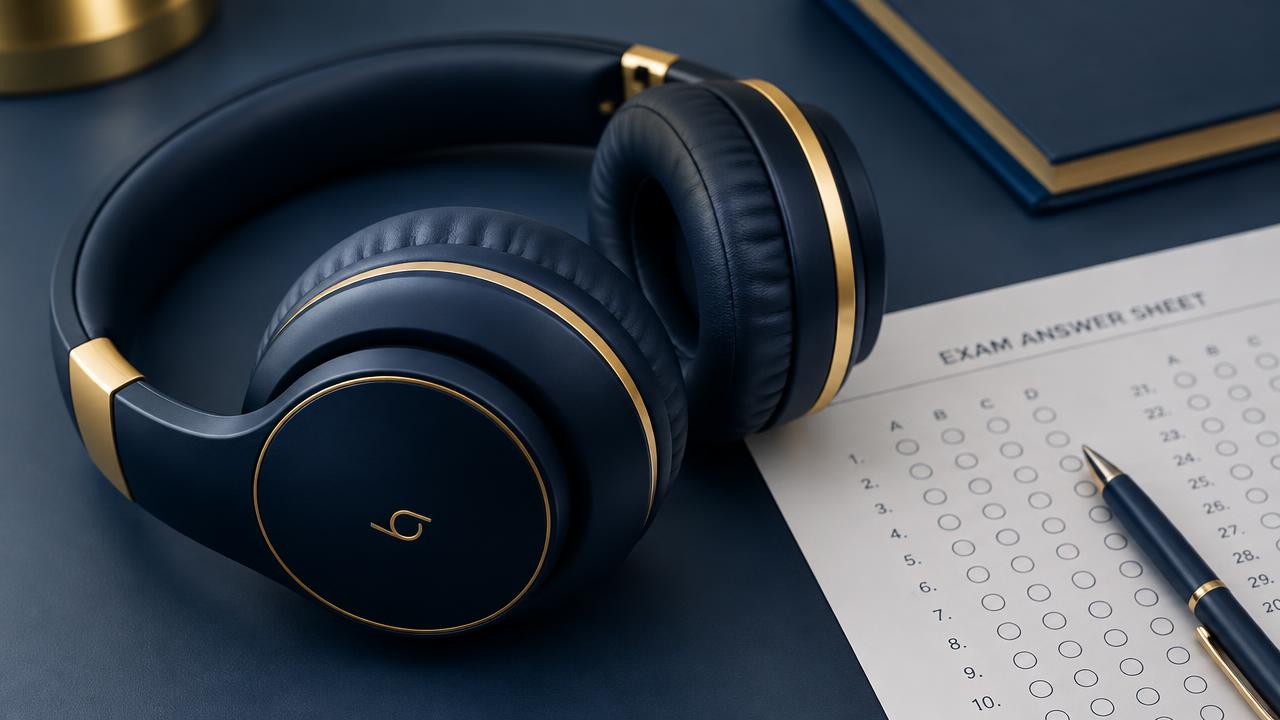
The TCF Canada listening section (Compréhension de l'oral) has 39 multiple-choice questions and lasts 35 minutes. One detail changes everything: each audio plays exactly once. No replays. Here are the 8 most common mistakes — and how to fix them.
1. Not reading the question before the audio plays
You have a short pause (around 10-12 seconds) before each clip. Use it to read the question and all answer options. Know what you're listening FOR before the audio starts.
2. Trying to understand every word
You don't need to. Focus on meaning and key information, not every syllable. Native speakers don't catch every word — they rely on context.
3. Falling into distractor traps
Examiners deliberately include wrong answers that reuse words from the audio. Hearing "train" in the clip doesn't mean the answer about trains is correct. Watch for: vocabulary traps, numerical/date traps, and opposite-statement traps.
4. Changing your answer at the last second
Your first instinct is usually right. Don't second-guess unless you have a concrete reason.
5. Forgetting the audio plays only once
This is the most critical rule of the TCF Canada listening section. If you miss something, let it go. Move to the next question immediately — don't dwell on what you lost.
6. Getting stuck on one question
Missing one question is recoverable. Missing five because you're still thinking about question 3 is not. Keep moving.
7. Not practicing with authentic French accents
TCF Canada audio uses a variety of French accents (European, Canadian, African). If you only practice with "textbook French," you'll struggle. Use RFI, France Inter, and authentic Canadian French content.
8. Not reviewing your mistakes
Every wrong answer is data. After each practice session, go back and understand WHY you got it wrong — was it vocabulary, speed, a distractor, or a missed detail? That's how you improve.
The TCF listening section rewards consistent daily practice. Start early, practice with exam-format exercises, and simulate real conditions.